
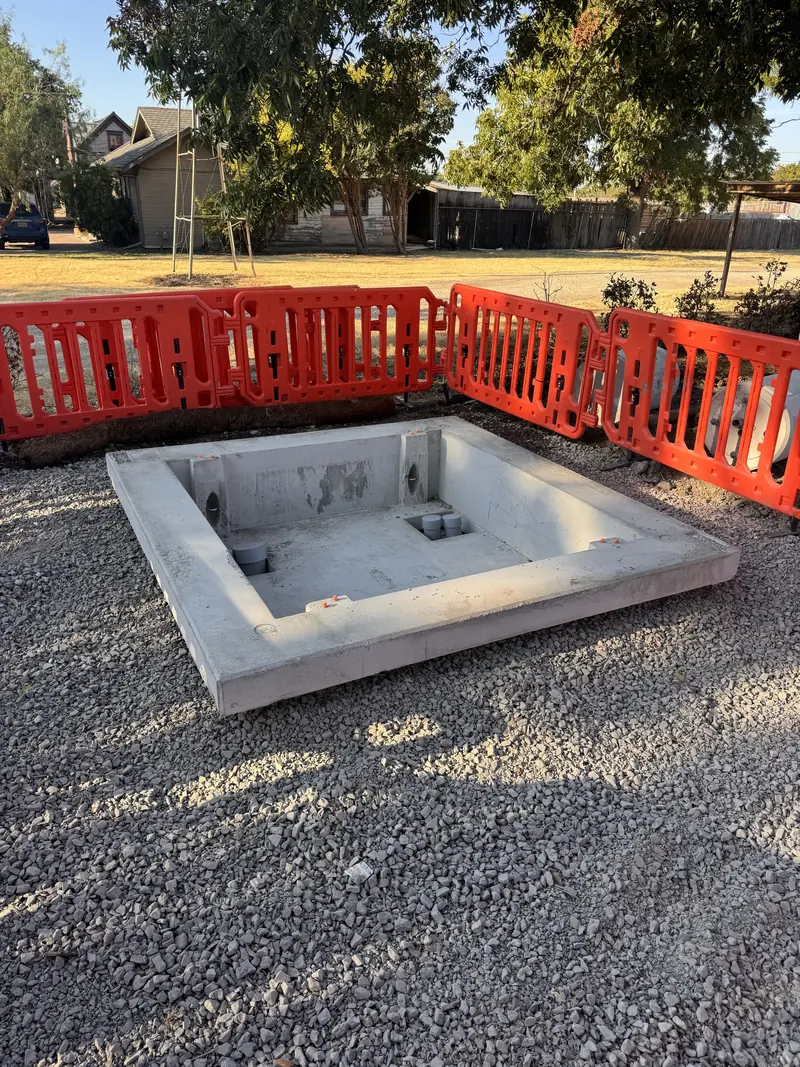
A productive excavation starts with clear responsibilities, current utility information, and a site-specific safety plan. Before equipment arrives, the project team should resolve what is known, what still needs verification, and who has authority to stop work when conditions change.
Identify utilities before excavation
OSHA’s excavation requirements call for determining the estimated location of expected buried installations before opening an excavation, contacting utility owners, and using safe and acceptable methods to establish exact locations as work approaches them. Read OSHA 1926.651(b).
For civil site work, bring available plans, locate information, owner contacts, and unresolved conflicts to the preconstruction discussion. Assign responsibility for confirming local notification requirements and the limits of the locate request.
Review protection, access, and changing conditions
OSHA identifies cave-ins as the greatest risk in excavation and emphasizes protective systems, safe entry and exit, and inspections. Water, nearby loads, and atmospheric hazards also need attention. See OSHA’s excavation overview.
A checklist does not determine which protective system is suitable. That decision belongs in the site-specific plan and the work of the qualified people responsible for it. Agree on how new conditions will be reported and how affected work will be stopped and reassessed.
Bring adjacent work into the discussion
Excavation for concrete, drainage, and site restoration rarely happens in isolation. A truck route, open pedestrian path, existing structure, or nearby contractor can change the usable work area. Coordinate staging, barricades, work windows, and surface restoration before crews compete for the same space.
At the planning meeting, identify who controls access, who coordinates with utility owners, who reviews excavation conditions, and who communicates changes to other trades. Record the decisions in the project’s own work plan.
What to send with a civil site inquiry
- Project location and drawings showing the proposed limits.
- Available utility information and known conflicts.
- Estimated quantities, depths, and access restrictions.
- Work windows and restoration requirements.
- The project contact and schedule for reviewing the scope.
Xcel’s civil construction page outlines the information that helps us review concrete, drainage, and site work.
Sources & further reading
Source material reviewed 2026-11-18. Industry forecasts can change; follow the original source for updates.